
How Can Utility Tokens Support Blockchain Ecosystem Growth?
Blockchain ecosystems are evolving beyond simple digital transactions. Modern blockchain networks increasingly rely on utility tokens to connect users, applications, services, and network activities within a unified digital environment. A well-designed utility token can encourage participation, support ecosystem functionality, facilitate transactions, and create practical use cases across different platforms.
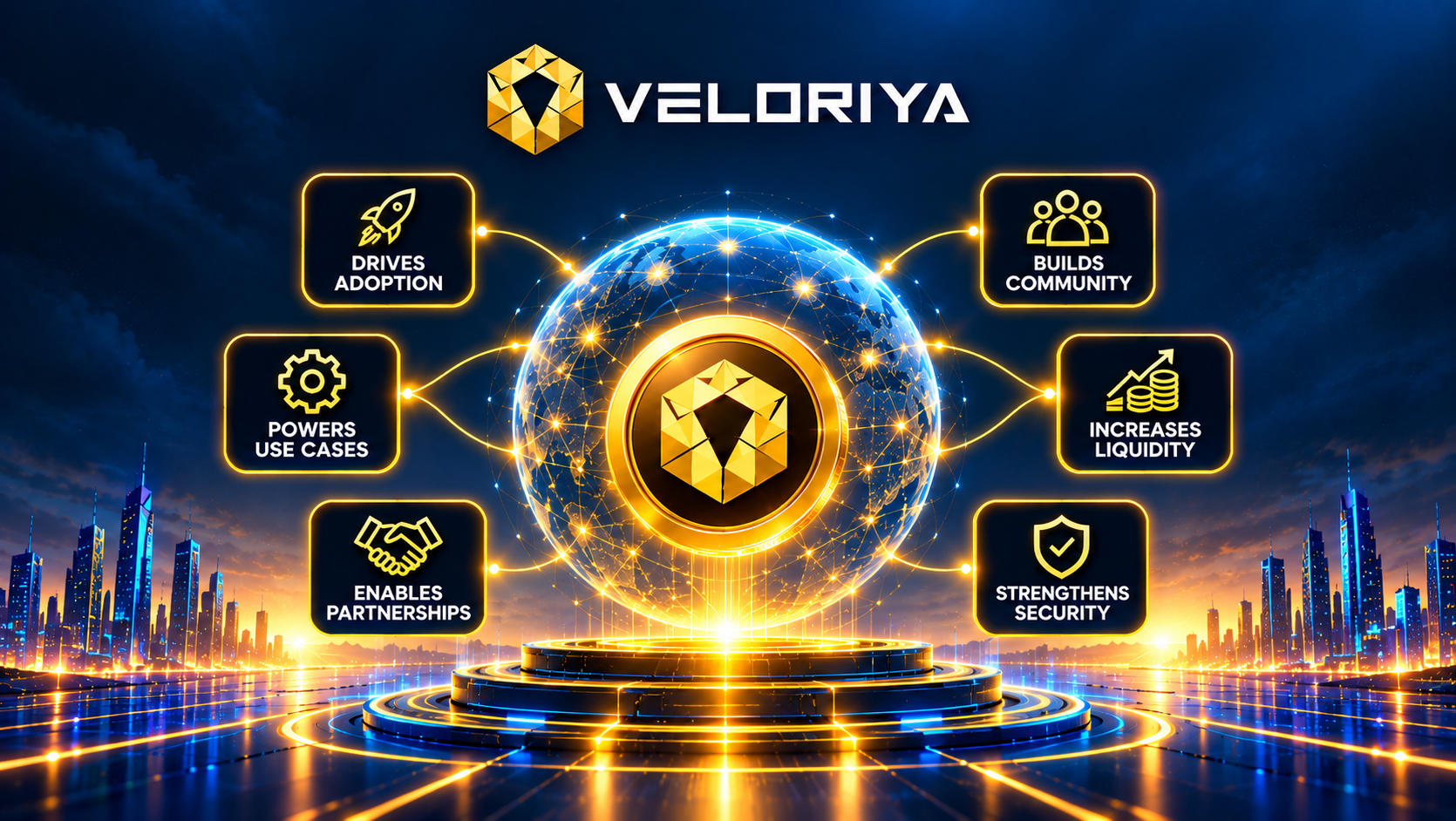
The Veloriya Token represents this type of ecosystem-focused digital asset, serving as a core component of the Veloriya ecosystem. Its intended role extends across digital transactions, platform services, decentralized applications, ecosystem interactions, and participation mechanisms.
Also Read: Can Veloriya Help Drive Real-World Adoption of Decentralized Technology?
What Is a Utility Token?
A utility token is a digital asset designed to provide specific functions or access within a blockchain ecosystem. Unlike an asset created purely for speculation, a utility token can be integrated into the practical operations of a network.
Depending on the ecosystem, utility tokens may be used to access platform features, pay transaction or service fees, participate in applications, receive incentives, or interact with decentralized services.
This functionality can create an internal economic structure where users have reasons to hold, use, and participate with the token while engaging with the broader ecosystem.
Supporting Ecosystem Participation
One of the most important ways utility tokens can support blockchain growth is by encouraging participation.
Blockchain ecosystems depend on active communities. Users, developers, validators, application providers, and other participants contribute to the development and activity of a network. Utility tokens can provide mechanisms for rewarding specific types of participation.
For example, token-based incentives can encourage users to interact with applications, participate in network activities, or contribute to ecosystem development. When participation increases, the ecosystem can potentially become more active and interconnected.
The Veloriya Token is positioned as a core digital asset within its ecosystem, supporting network functionality, ecosystem activity, and platform operations.
Enabling Digital Transactions
Utility tokens can also provide a convenient medium for transactions within blockchain-based environments.
Instead of relying exclusively on external payment systems, an ecosystem can use its native token for specific digital services and interactions. This can create a more integrated economic model where the token connects different parts of the network.
The Veloriya Token is designed to support digital transactions and ecosystem interactions, helping connect different functions within the broader platform.
When properly implemented, this type of functionality can make blockchain ecosystems more cohesive by providing a common digital asset for various activities.
Connecting Applications and Services
A growing blockchain ecosystem often includes multiple applications and services. Utility tokens can help establish a connection between these different components.
For example, a token may be used across decentralized applications, platform services, digital transactions, and community-oriented activities. This creates additional utility while allowing different ecosystem components to interact through a common economic layer.
The Veloriya Token is intended to operate across multiple ecosystem functions, supporting services, decentralized applications, transactions, and broader blockchain utilities.
This interconnected approach can help transform an individual blockchain platform into a wider digital ecosystem.
Creating Incentive Mechanisms
Another important role of utility tokens is creating incentives for ecosystem participation.
Blockchain networks can use token-based mechanisms to encourage users to contribute to network activity. Depending on the architecture and design, incentives may involve staking, rewards, participation benefits, or access to particular ecosystem functions.
The Veloriya ecosystem incorporates incentive-oriented functionality, including staking opportunities and ecosystem benefits. Such mechanisms can encourage longer-term engagement when they are structured transparently and supported by sustainable economic models.
However, incentives should be carefully designed. Excessive token issuance or unsustainable rewards can create economic challenges. Long-term ecosystem growth requires a balance between incentives, utility, demand, and network activity.
Supporting Decentralized Ecosystems
Decentralization is one of blockchain technology’s defining characteristics. Utility tokens can contribute to decentralized ecosystems by giving participants a digital mechanism for interacting with network services and activities.
Rather than concentrating every function within a centralized platform, blockchain ecosystems can distribute participation among users, developers, applications, and other network components.
A utility token can become an important connection point between these participants, allowing them to interact within a shared digital environment.
For ecosystems such as Veloriya, this approach can support the broader goal of creating a connected and decentralized digital infrastructure.
Increasing Transparency and Trust
Blockchain technology provides transparent transaction records and verifiable network activity. Utility tokens benefit from these characteristics because token-related transactions and operations can be recorded on blockchain infrastructure.
The Veloriya Token is designed within a blockchain-based environment where network operations can benefit from transparent verification and immutable recordkeeping.
Transparency can help ecosystem participants understand how transactions and activities are processed. It can also contribute to trust when network rules, token functions, and relevant ecosystem mechanisms are clearly communicated.
Encouraging Long-Term Ecosystem Development
A utility token can support long-term growth when its usefulness expands alongside the ecosystem.
As new applications, services, partnerships, and integrations are introduced, additional token use cases can potentially emerge. This creates opportunities for the token to become more deeply integrated into the network.
For Veloriya, the token serves as a foundational digital asset intended to support platform services, ecosystem activity, decentralized applications, and blockchain utilities.
The effectiveness of any utility token ultimately depends on real usage, sustainable economics, strong infrastructure, security, and meaningful ecosystem development. A token alone cannot guarantee blockchain growth.
Conclusion
Utility tokens can play a significant role in supporting blockchain ecosystem growth by connecting users, applications, services, transactions, and participation mechanisms. They can provide practical functionality while helping create an integrated digital economy within a blockchain environment.
The Veloriya Token is positioned as the core digital asset of the Veloriya Ecosystem, supporting transactions, platform functionality, decentralized applications, ecosystem interactions, and incentive mechanisms.
As blockchain technology continues to evolve, utility will remain an important factor in determining how effectively digital ecosystems attract participation and develop sustainable use cases. When supported by strong infrastructure, transparent operations, scalable technology, and genuine applications, utility tokens can become an important component of a growing blockchain ecosystem.
Also Read: How Is Decentralization Shaping The Future Of Digital Infrastructure?
Table of Contents
Leave a Reply