
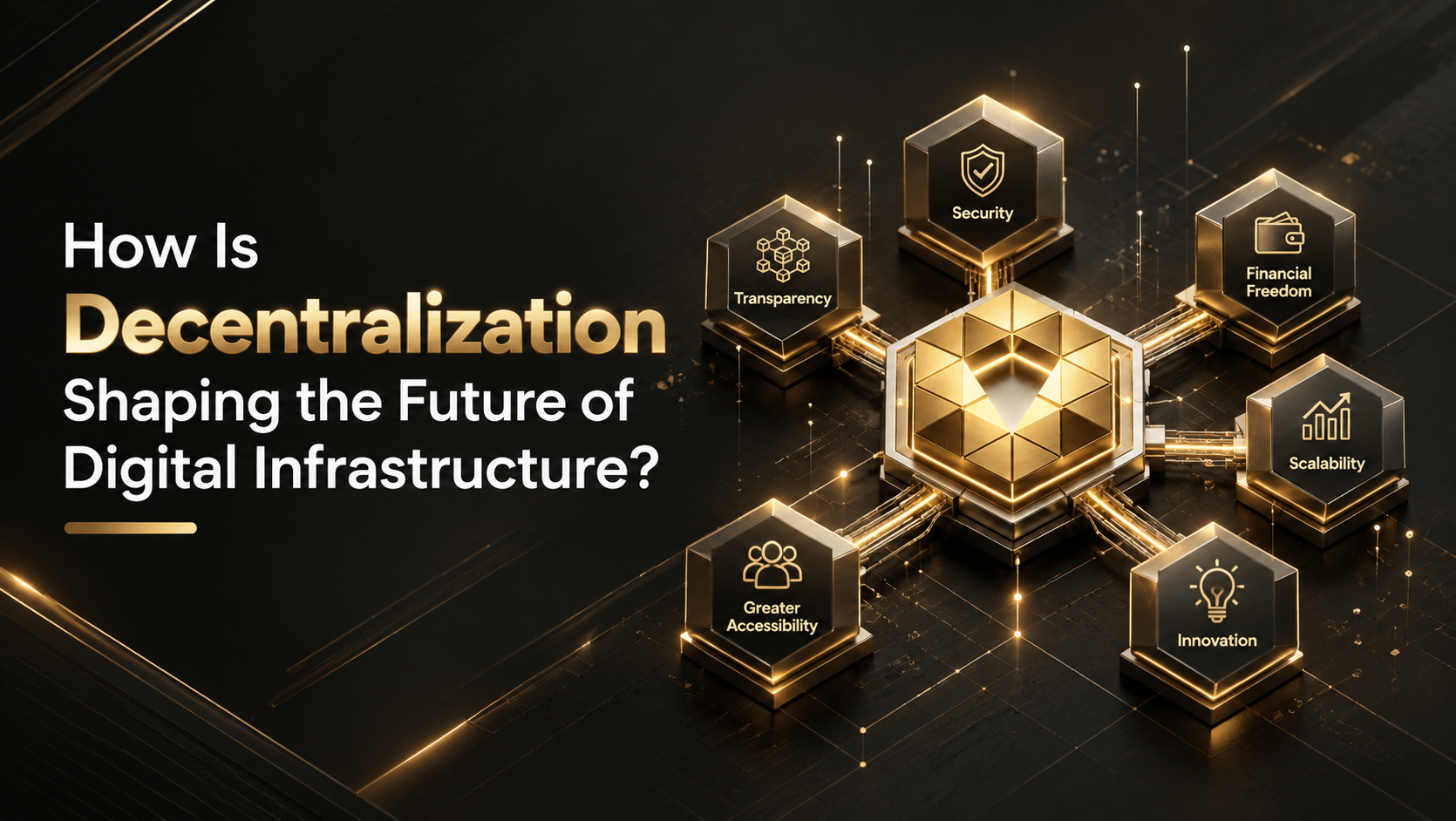
How Is Decentralization Shaping The Future Of Digital Infrastructure?
Digital infrastructure is evolving rapidly as businesses, developers, and communities look for systems that can provide greater transparency, scalability, security, and flexibility. Traditional digital infrastructure has generally relied on centralized organizations to manage data, applications, transactions, and access. While centralized models remain important, decentralization is introducing a different approach to how digital networks can operate.
Decentralization distributes certain functions across multiple participants rather than relying entirely on a single authority or central point of control. Blockchain technology is one of the key technologies supporting this transition. By combining distributed networks, cryptographic verification, transparent records, and programmable applications, decentralized infrastructure can create new ways to build and operate digital ecosystems.
Also Read: Can Veloriya Help Drive Real-World Adoption of Decentralized Technology?
Understanding Decentralized Digital Infrastructure
Decentralized digital infrastructure refers to networks and systems where data, operations, validation, or decision-making can be distributed across multiple participants. Instead of depending on one central server or organization for every function, decentralized networks can use distributed nodes and blockchain-based protocols.
This approach can create infrastructure that is more connected and adaptable. Participants can interact with digital services while blockchain technology can provide mechanisms for recording and verifying activities.
For emerging ecosystems, decentralization can also support new models involving digital assets, decentralized applications, smart contracts, and community participation.
Improving Transparency Through Blockchain
Transparency is one of the important characteristics associated with blockchain-based infrastructure. Transactions and other network activities can be recorded on a distributed ledger, creating a verifiable history of activity.
This can reduce dependence on privately maintained records for certain types of digital transactions. Participants can use blockchain verification mechanisms to confirm information and track activities according to the rules of a particular network.
For digital ecosystems, this transparency can contribute to greater visibility around network operations and asset movements. It can also support accountability when properly designed governance, access controls, and verification mechanisms are implemented.
Supporting Greater Security
Security is another important consideration when designing digital infrastructure. Decentralized networks can use cryptographic technologies and distributed validation to protect network activity.
Instead of placing all infrastructure responsibilities in one location, distributed architectures can spread certain functions across multiple nodes. This can reduce some risks associated with a single point of failure, although decentralization does not automatically eliminate security vulnerabilities.
Smart contracts, wallets, applications, and blockchain networks still require careful development, testing, monitoring, and security management. The overall security of a decentralized ecosystem depends on both its underlying architecture and the applications built on top of it.
Enabling Scalable Digital Ecosystems
As digital services expand, infrastructure needs to support increasing numbers of users, transactions, applications, and interactions. Scalability therefore becomes an important requirement.
Modern blockchain networks and decentralized infrastructure are being developed with different approaches to improving transaction capacity, network performance, and resource efficiency. Layered architectures, optimized consensus mechanisms, and interoperability solutions are among the approaches used across the broader blockchain industry.
Veloriya is positioned around the concept of a connected digital ecosystem where advanced technology, scalable systems, and decentralized innovation work together. Its ecosystem approach focuses on network functionality, digital services, applications, and blockchain utilities.
The Growing Role Of Digital Tokens
Digital tokens can become an important component of decentralized infrastructure by providing utility within blockchain ecosystems. Depending on how a network is designed, tokens can support transactions, platform services, decentralized applications, participation mechanisms, and other ecosystem functions.
Veloriya Token is presented as the core digital asset within the Veloriya ecosystem. According to the platform’s stated model, it is designed to support network functionality, ecosystem activity, platform operations, and interactions between different components of the network.
This illustrates how tokens can move beyond simple transactional use cases and become integrated into broader digital infrastructure. However, the specific utility and economic characteristics of any token depend on its technical design, governance, adoption, and actual ecosystem usage.
Encouraging Community Participation
Decentralization can also change how participants interact with digital networks. Rather than limiting participation to a centralized organization, decentralized ecosystems can provide mechanisms through which users, developers, validators, and other participants contribute to network activity.
Community participation can support ecosystem development by encouraging users to interact with applications, contribute resources, provide feedback, or participate in network-related activities.
Veloriya highlights community-driven growth as part of its ecosystem vision. Its stated focus includes decentralized participation and incentive mechanisms intended to encourage continued ecosystem engagement.
Creating More Connected Digital Infrastructure
Another significant impact of decentralization is the potential for greater connectivity between different digital services. Blockchain networks can connect digital assets, applications, smart contracts, and other components through programmable infrastructure.
Interoperability is particularly important as multiple blockchain networks and digital platforms continue to develop. Systems that can communicate effectively with other networks may provide users and businesses with broader functionality.
A connected ecosystem can therefore provide an infrastructure layer where different services interact rather than operating as completely isolated platforms.
What Does The Future Hold?
The future of digital infrastructure is likely to involve a combination of centralized and decentralized technologies rather than one model completely replacing the other. Different applications have different requirements related to performance, governance, privacy, compliance, cost, and security.
Decentralization can provide valuable infrastructure capabilities, particularly where transparent verification, distributed participation, digital ownership, and programmable transactions are important.
Projects such as Veloriya reflect the broader movement toward integrated digital ecosystems that combine blockchain technology, token utility, scalability, security, and community participation.
As the technology develops, the focus will increasingly move from simply adopting blockchain to building practical systems that solve real-world problems efficiently. Sustainable adoption will depend on usability, reliable infrastructure, strong security practices, meaningful utility, and the ability to deliver value to participants.
Conclusion
Decentralization is shaping the future of digital infrastructure by introducing new approaches to transparency, security, connectivity, digital asset utility, and community participation. Blockchain technology provides much of the underlying infrastructure for these developments, while decentralized applications and token-based ecosystems expand their potential use cases.
Veloriya’s Ecosystem vision aligns with these developments by bringing together scalable infrastructure, blockchain utilities, decentralized participation, and digital services within a connected environment.
As digital ecosystems continue to evolve, decentralization can become an important part of the infrastructure supporting the next generation of digital applications, networks, and services.
Also Read: Why Is Scalable Digital Infrastructure Essential for Tomorrow’s Technology?
Table of Contents

Leave a Reply